Free Shipping On All Orders Over $75
Free Shipping on all orders over $75 Australia Wide
Free Shipping On All Orders Over $75
Free Shipping on all orders over $75 Australia Wide
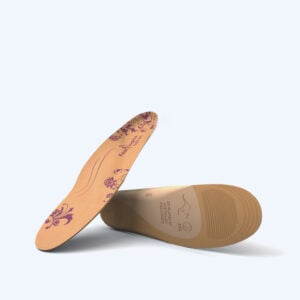
Ball of foot pain, commonly called “Metatarsalgia”, is often associated with excessive or poorly distributed pressure beneath the metatarsal heads. The best insoles for metatarsalgia therefore aim to cushion the forefoot, redistribute plantar pressure and support the foot, often using a metatarsal pad or raise positioned behind the painful area.
If you experience an aching, burning or sharp pain underneath the forefoot, particularly just behind the toes, you may be experiencing metatarsalgia. The condition can make walking, running and even standing uncomfortable.
Choosing suitable insoles, orthotics or shoe inserts for ball of foot pain can be an important part of conservative treatment. However, not all insoles work in the same way. Understanding why the forefoot hurts helps explain what features to look for.
Metatarsalgia is a general term describing pain and irritation in the ball of the foot around the metatarsal heads—the ends of the five long metatarsal bones immediately behind the toes.
Typical symptoms include aching, burning or sharp pain underneath the forefoot. Some people describe the sensation as though they have a pebble in their shoe.
Symptoms commonly become worse when standing, walking or running, particularly barefoot on hard surfaces. (Mayo Clinic)
Mayo Clinic – Metatarsalgia: Symptoms and Causes
Metatarsalgia isn’t a single disease with one cause. Instead, increased mechanical stress on the forefoot can arise from several factors, including high-impact activities, high arches, poorly fitting footwear, high heels, excess body weight, hammertoes and other foot-shape abnormalities. Stress fractures and Morton’s neuroma can also produce symptoms that resemble metatarsalgia. (Mayo Clinic)
For this reason, persistent or unexplained forefoot pain should be properly diagnosed rather than automatically assumed to be metatarsalgia.
The key concept is pressure redistribution.
During walking, body weight transfers forward through the foot until considerable load passes through the metatarsal heads before the toes leave the ground.
When too much pressure becomes concentrated beneath one or more metatarsal heads, repeated loading can irritate the tissues and contribute to forefoot pain.
A well-designed orthotic insole for metatarsalgia attempts to change this loading pattern. Rather than merely putting something soft underneath the painful spot, the aim is to:
This is why an appropriately designed orthotic can be more useful than simply adding a thin foam shoe insert.
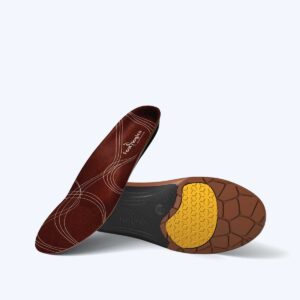
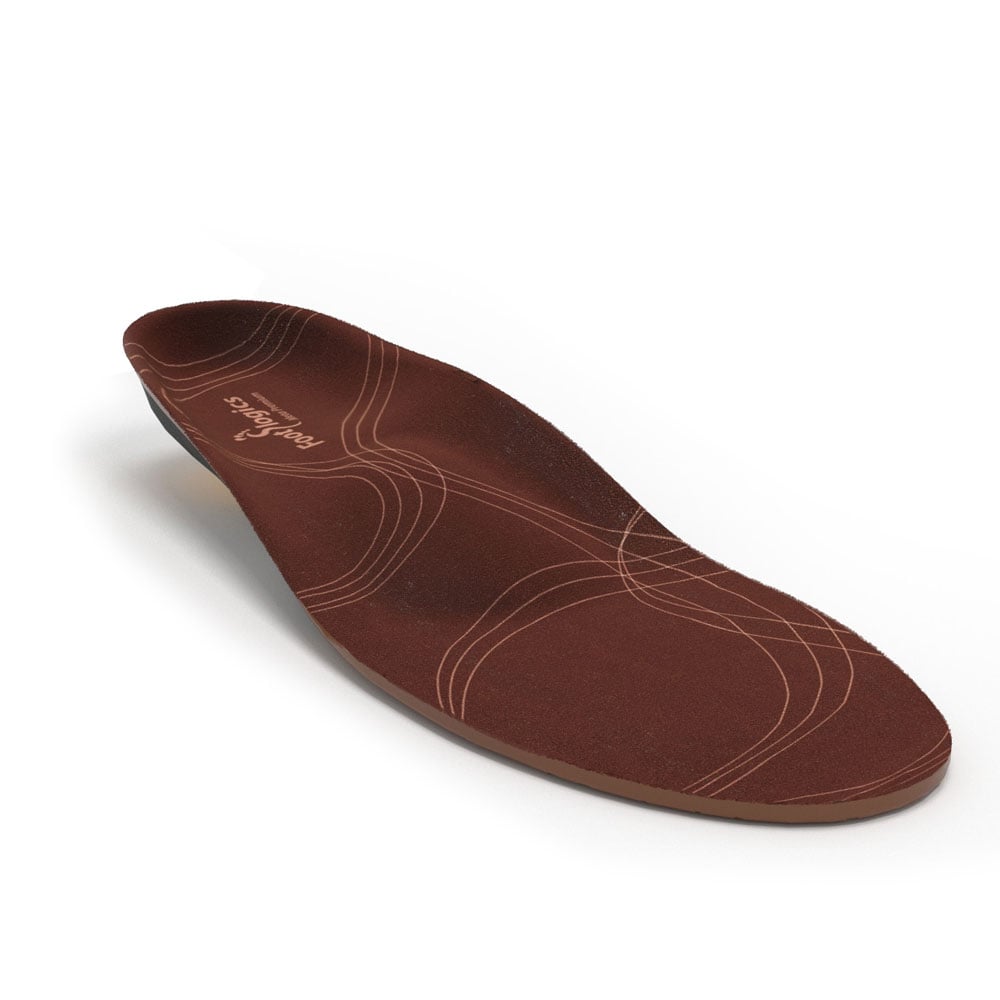
For many people, the best insoles for ball of foot pain combine arch support, substantial forefoot cushioning and a properly positioned metatarsal pad or raise.
Cushioning is particularly important when the ball of the foot is subjected to repetitive impact.
A study comparing several insole configurations found that both soft cushioning material and metatarsal pads reduced forefoot plantar pressure. Interestingly, the soft 1/4-inch Plastazote insole produced the greatest pressure reduction among the designs tested. (PubMed Central (PMC))
This reinforces an important point: cushioning isn’t merely about comfort—it can alter the pressure underneath the forefoot.
Read the forefoot pressure-relief study on PubMed Central
One of the most useful features in an orthotic for metatarsalgia can be a metatarsal pad, sometimes called a metatarsal dome or metatarsal raise.
Importantly, it normally isn’t intended to sit directly underneath the painful metatarsal heads.
The metatarsal raise is generally positioned just behind the metatarsal heads. Its purpose is to support the metatarsal region and increase contact with the area proximal to the metatarsal heads, helping redistribute load away from areas experiencing excessive pressure.
Research using in-shoe pressure measurement has demonstrated that metatarsal pads can reduce pressure beneath the metatarsal heads, although their effectiveness varies with pad design and positioning. (PubMed)
Correct placement therefore matters. A poorly positioned or excessively prominent metatarsal pad may feel uncomfortable rather than helpful.
Arch support may also help because the objective is to distribute forces across more of the foot rather than allowing most of the load to concentrate at the heel and forefoot.
The Mayo Clinic includes arch supports and metatarsal pads among conservative treatment options for metatarsalgia and notes that arch supports can reduce stress on the metatarsal bones. (Mayo Clinic)
Mayo Clinic – Metatarsalgia Treatment
This doesn’t mean that the highest or hardest arch support is necessarily better. An orthotic should contour comfortably to the foot and suit the person’s biomechanics.
There is useful clinical evidence supporting foot orthoses for forefoot pain.
A systematic review examining custom-made foot orthoses for forefoot pain included nine studies and 487 participants. The authors reported improvements in forefoot pain associated with custom orthoses across several conditions, including secondary metatarsalgia. (PubMed)
Systematic review of orthotics for forefoot pain – PubMed
More recently, a 2024 systematic review and meta-analysis specifically investigated customised orthotic treatment for mechanical metatarsalgia beneath the central metatarsal heads. Five studies involving 158 participants were included. The analysis found customised orthotic treatment effective at reducing plantar pressure beneath the second-to-fourth metatarsal heads compared with no treatment, although results were similar to some standardised footwear, standard orthoses and isolated metatarsal domes. (PubMed)
2024 systematic review and meta-analysis – PubMed
These findings are important because they suggest that pressure redistribution—not simply adding more padding—is central to orthotic management of mechanical metatarsalgia.
Ideally, you don’t necessarily have to choose between the two.
A good metatarsalgia shoe insert can incorporate both substantial forefoot cushioning and a metatarsal raise.
Cushioning helps reduce impact and localised pressure, while the metatarsal support attempts to change how forces are distributed across the forefoot.
Research involving recreational runners found that forefoot cushioning significantly reduced peak forefoot plantar pressure, demonstrating the potential importance of cushioning in shoe inserts intended to unload this region. (PubMed Central (PMC))
For someone who spends considerable time walking or standing on hard surfaces, a very thin, hard orthotic may therefore be less comfortable than a full-length orthotic incorporating adequate shock-absorbing material.
Even the best insoles for metatarsalgia cannot compensate completely for inappropriate footwear.
Look for shoes with adequate forefoot width, sufficient depth for the orthotic and good cushioning. Narrow shoes can compress the forefoot, while high heels shift additional body weight toward the metatarsal heads.
Mayo Clinic specifically recommends correctly fitting shoes and limiting high heels as part of conservative management. (Mayo Clinic)
If your shoe becomes excessively tight after inserting an orthotic, the combination may actually create additional pressure.
For mechanical metatarsalgia, useful features often include forefoot cushioning, appropriate arch support and pressure redistribution, sometimes combined with a metatarsal pad or raise. The best design depends on the cause of the pain and individual foot shape.
They can. Systematic-review evidence indicates that foot orthoses can reduce forefoot pain in several conditions, while a 2024 meta-analysis found customised orthotic treatment effective at reducing plantar pressure beneath the central metatarsal heads in mechanical metatarsalgia. (PubMed)
A metatarsal pad or raise helps redistribute pressure away from the metatarsal heads by supporting the area immediately behind them. Positioning is important; placing a prominent pad directly underneath an already painful metatarsal head can be uncomfortable.
Cushioning can be very useful. Research has demonstrated that appropriately cushioned insoles can reduce forefoot plantar pressure. However, cushioning alone doesn’t address every cause of metatarsalgia, so combining cushioning with appropriate support and footwear may be preferable. (PubMed Central (PMC))
Seek professional assessment if the pain is severe, persists despite changing footwear and reducing aggravating activities, follows an injury, or is associated with swelling, numbness or neurological symptoms. Other conditions—including a stress fracture or Morton’s neuroma—can produce symptoms resembling metatarsalgia. (Mayo Clinic)
When choosing the best insoles for ball of foot pain, don’t simply look for the thickest or softest shoe insert.
For many people with mechanical metatarsalgia, the ideal design combines effective forefoot cushioning, pressure redistribution, comfortable arch support and an appropriately positioned metatarsal raise.
The underlying principle is straightforward: rather than repeatedly loading a small and painful area underneath the metatarsal heads, a well-designed orthotic aims to distribute forces more evenly across the foot.
Combined with properly fitting, cushioned footwear and appropriate management of the underlying cause, orthotics and shoe inserts can form an important part of conservative treatment for metatarsalgia and ball of foot pain. Read more about Metatarsalgia here.