Free Shipping On All Orders Over $75
Free Shipping on all orders over $75 Australia Wide



If you suffer from Plantar Fasciitis or heel pain, the right orthotic insoles can provide support and cushioning while helping reduce stress on the plantar fascia.
Orthotics for Plantar Fasciitis are shoe inserts designed to support the arch, cushion the heel and redistribute forces underneath the foot. They are commonly used as part of a conservative treatment program for plantar heel pain, particularly alongside stretching, appropriate footwear and activity modification.
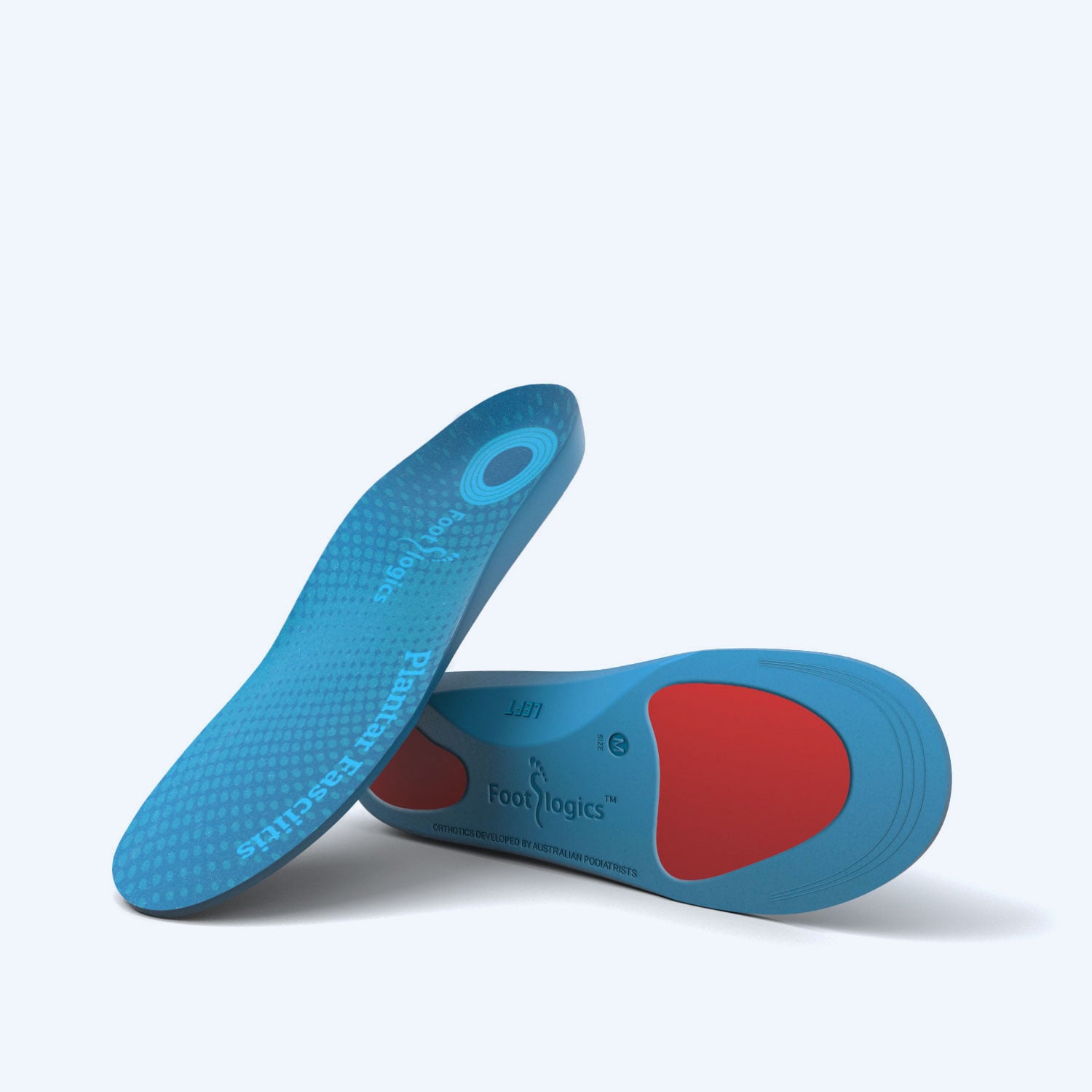
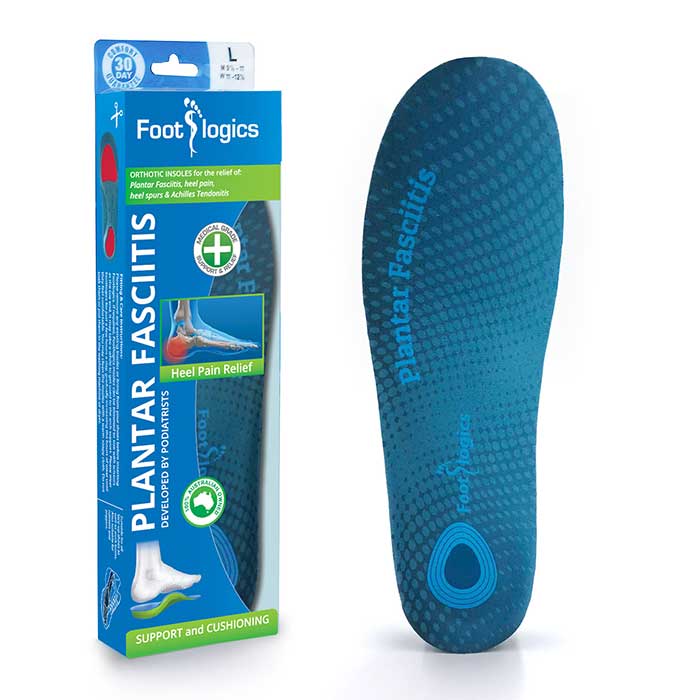
Footlogics offers a range of Plantar Fasciitis orthotics, including our full-length Footlogics Plantar Fasciitis insole, developed by Australian podiatrists specifically for people experiencing heel pain.
Plantar Fasciitis is one of the most common causes of pain underneath the heel.
The plantar fascia is a strong band of connective tissue extending from the heel towards the toes. It plays an important role in supporting the arch of the foot and in normal foot mechanics during standing, walking and running.
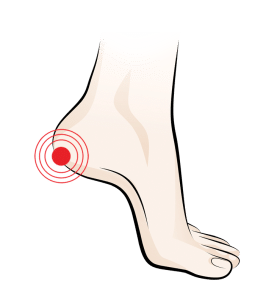
Plantar Fasciitis develops when the plantar fascia becomes irritated or overloaded. The condition is often characterised by pain underneath the heel, particularly around the point where the plantar fascia attaches to the calcaneus or heel bone.
A classic symptom is heel pain during the first few steps after getting out of bed in the morning. Pain may initially ease as you start moving but return after prolonged standing, walking or exercise.
Factors associated with plantar heel pain can include repetitive loading, prolonged standing, changes in physical activity, limited ankle dorsiflexion and foot biomechanics. Both people with flatter feet and people with high arches can develop the condition.
The purpose of orthotics for Plantar Fasciitis isn’t simply to place something soft underneath a painful heel.
A well-designed orthotic can provide a combination of:
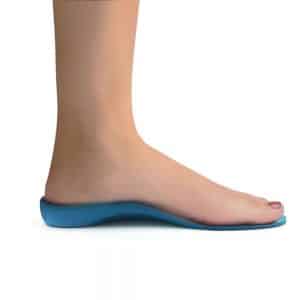
Arch support – helping support the medial longitudinal arch and potentially reducing mechanical stress on the plantar fascia.
Heel cushioning – helping provide shock absorption beneath the heel.
Pressure redistribution – spreading forces over a larger area of the plantar surface rather than concentrating loading around sensitive areas.
Heel stability – a contoured or deep heel cup can help stabilise the rearfoot within the shoe.
Foot support – an appropriately designed orthotic can provide a more supportive interface between your foot and footwear during walking and standing.
This combination of arch support and heel cushioning is particularly relevant for plantar heel pain.
The 2023 Clinical Practice Guideline for heel pain and Plantar Fasciitis describes foot orthoses as devices intended to support the medial longitudinal arch and offload the plantar fascia. The guideline states that clinicians may use either prefabricated or custom orthoses in combination with other treatments to reduce pain and improve function. (DOI)
Read the 2023 Plantar Fasciitis Clinical Practice Guideline
There is clinical research supporting the use of foot orthoses for plantar heel pain, although it is important not to overstate the evidence.
A 2026 systematic review and meta-analysis analysed eight randomised controlled trials involving 391 people with Plantar Fasciitis. The researchers found that foot orthoses significantly reduced pain compared with control interventions, although they did not find statistically significant improvements in foot function or walking ability. The authors recommended considering orthoses as an adjunct rather than the sole treatment for Plantar Fasciitis.
Read the 2026 systematic review on PubMed
An earlier systematic review involving 19 trials and 1,660 participants found moderate-quality evidence that foot orthoses were more effective than sham orthoses at reducing pain in the medium term (7–12 weeks), although the researchers questioned the clinical magnitude of the improvement.
An Australian randomised trial conducted through La Trobe University compared prefabricated, customised and sham orthoses. At three months, both the prefabricated and customised orthoses produced improvements compared with sham devices, particularly for function, and the researchers found similar effectiveness between the prefabricated and customised orthoses used in the study.
Read the Australian orthotics study on PubMed
This is useful evidence for people wondering whether they automatically require expensive custom-made orthotics.
Footlogics Plantar Fasciitis orthotic insoles were developed by Australian podiatrists specifically for people suffering from Plantar Fasciitis, heel pain and related foot complaints.
Unlike a simple flat cushioning insert, the Footlogics Plantar Fasciitis orthotic combines biomechanical arch support with heel and forefoot cushioning.
Key features include:
The full-length design is suitable for many lace-up shoes, walking shoes, sports shoes and work boots. (Footlogics)
View Footlogics Plantar Fasciitis Orthotic Insoles
The plantar fascia and longitudinal arch are mechanically interconnected.
Rather than allowing the foot to function unsupported inside the shoe, a contoured orthotic provides contact beneath the arch. For some people, this can help reduce loading on painful plantar structures and improve comfort.
However, more arch support isn’t automatically better. An orthotic needs to be comfortable and appropriate for the individual’s foot.
This is one reason Footlogics orthotics use supportive but relatively flexible materials rather than simply placing an extremely hard structure underneath the arch.
People with Plantar Fasciitis commonly experience pain where the plantar fascia originates around the heel.
Providing cushioning underneath the heel can therefore be an important part of an orthotic design.
Footlogics Plantar Fasciitis insoles incorporate a Poron cushioning pad beneath the heel in addition to the contoured EVA orthotic structure. (Footlogics)
One of the most common questions is whether you need custom-made orthotics for Plantar Fasciitis.
Not necessarily.
Custom orthotics can be appropriate where there are complex biomechanical problems, significant deformity or other clinical considerations. However, research hasn’t consistently demonstrated that custom orthotics are superior to good-quality prefabricated orthoses for plantar heel pain.
The 2023 clinical guideline notes similarities in outcomes between custom and prefabricated orthoses, while the Australian randomized trial discussed above also found similar effectiveness between the prefabricated and customised devices tested. (DOI)
For many people, therefore, a well-designed prefabricated Plantar Fasciitis orthotic can be a sensible first conservative option.
We recommend thinking of Plantar Fasciitis orthotics as one part of treatment rather than a stand-alone cure.
This is also consistent with current clinical guidelines.
The 2023 guideline specifically recommends plantar fascia-specific stretching and gastrocnemius/soleus stretchingfor reducing pain and improving function. It also recommends against relying on orthoses alone for short-term pain relief, while supporting their use in combination with other treatments. (DOI)
A sensible conservative approach can therefore include:
orthotic support + appropriate footwear + plantar fascia/calf stretching + modification of aggravating activities.
People with persistent or severe symptoms should consult a podiatrist, physiotherapist, GP or other appropriately qualified health professional.
Footlogics offers several orthotics for Plantar Fasciitis and heel pain, because footwear and activity levels differ from person to person.
Footlogics Plantar Fasciitis is our primary full-length orthotic designed specifically for the condition. It is suitable for many walking shoes, everyday lace-up footwear, work boots and sports shoes.
Footlogics Sports may be suitable for people who require an orthotic for running, longer-distance walking or higher levels of sporting activity. The current Sports model uses cushioning PU and gel together with a supportive outer shell.
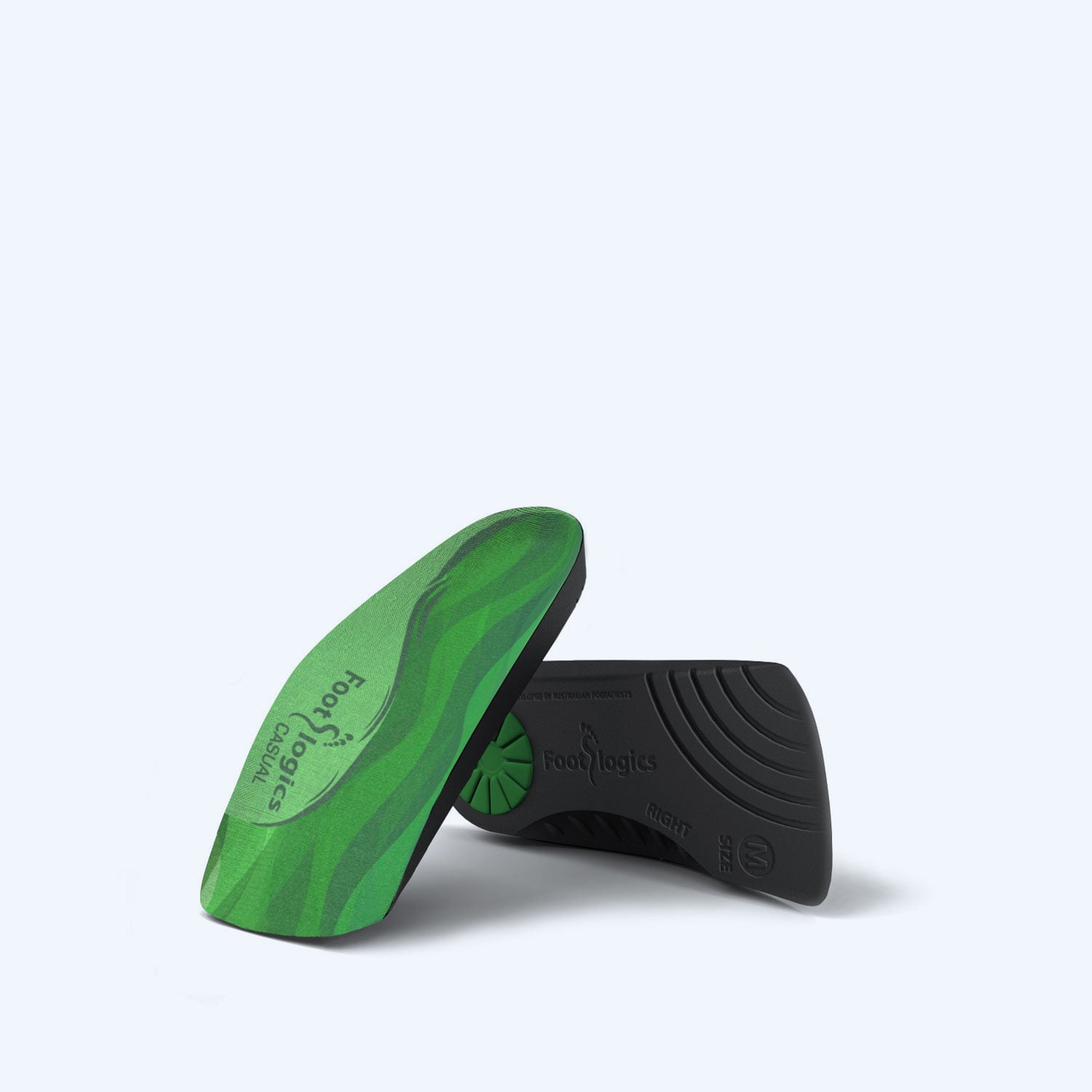
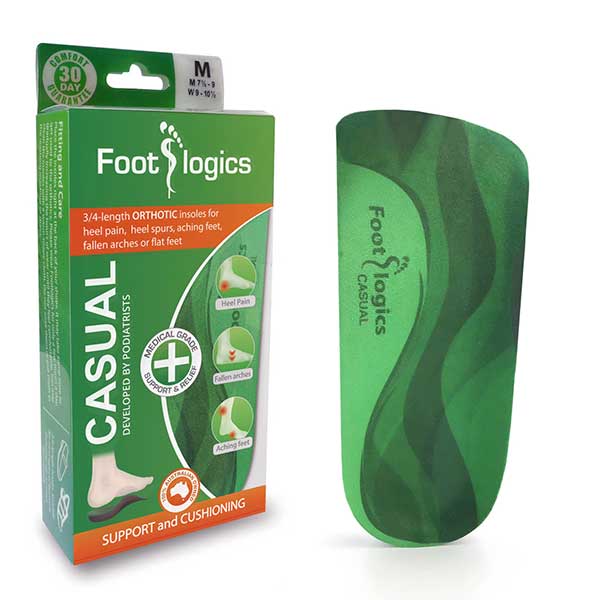
Footlogics Casual and Versa provide alternatives where a different footwear fit or orthotic format is required.
The best choice therefore depends not only on your heel pain, but also on your footwear, activity and individual foot shape.
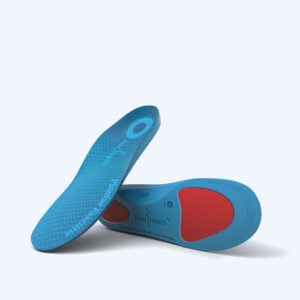
The best orthotics for Plantar Fasciitis generally provide a combination of appropriate arch support, heel cushioning, heel stability and pressure redistribution. The orthotic should also fit correctly inside your footwear. Current evidence doesn’t establish that expensive custom orthotics are necessarily better than well-designed prefabricated orthoses for uncomplicated plantar heel pain. (DOI)
Orthotics are generally worn during weight-bearing activities inside appropriate footwear. Some people adapt immediately, while others prefer to increase wearing time gradually. Plantar Fasciitis commonly takes time to improve, so orthotics should generally be combined with recommended stretching and other conservative measures rather than expecting immediate results.
It is better to say that orthotics can help manage Plantar Fasciitis rather than claiming they provide a guaranteed cure. Current clinical guidelines support using foot orthoses alongside other treatments, particularly stretching and appropriate management of contributing factors. (DOI)
Not necessarily. Research has not consistently found custom orthotics to be superior to prefabricated orthotics for plantar heel pain. In a randomized Australian trial, the prefabricated and customised devices studied had similar effectiveness. (PubMed)
If heel pain is making those first morning steps uncomfortable, the right Plantar Fasciitis orthotics can form an important part of conservative treatment.
Look for an orthotic that provides support beneath the arch, cushioning underneath the heel and a stable, comfortable platform for the foot.
Footlogics Plantar Fasciitis orthotic insoles combine these features in a full-length insole developed by Australian podiatrists and designed specifically for Plantar Fasciitis and heel pain.
Combined with appropriate footwear, stretching and sensible management of aggravating activities, orthotics can help provide the support and cushioning your feet need while recovering from plantar heel pain.